
By Jason Chiu, Professional Services Group Manager with Axis Canada
Mining companies spend enormous effort securing active operations. When production is underway, security protocols are built around constant movement. Workers arrive on shifts, haul trucks move through the pit, equipment runs across the site, and supervisors regularly monitor operations.
But what happens when all of that stops?
Across the mining industry, it is common for sites to move into periods of care-and-maintenance, pause between development stages, or temporarily shut down while market conditions shift. During these periods, the priorities change dramatically. Production is no longer the focus. Instead, the mission becomes protecting assets, minimizing operational costs, and maintaining environmental and safety compliance until the operation resumes.
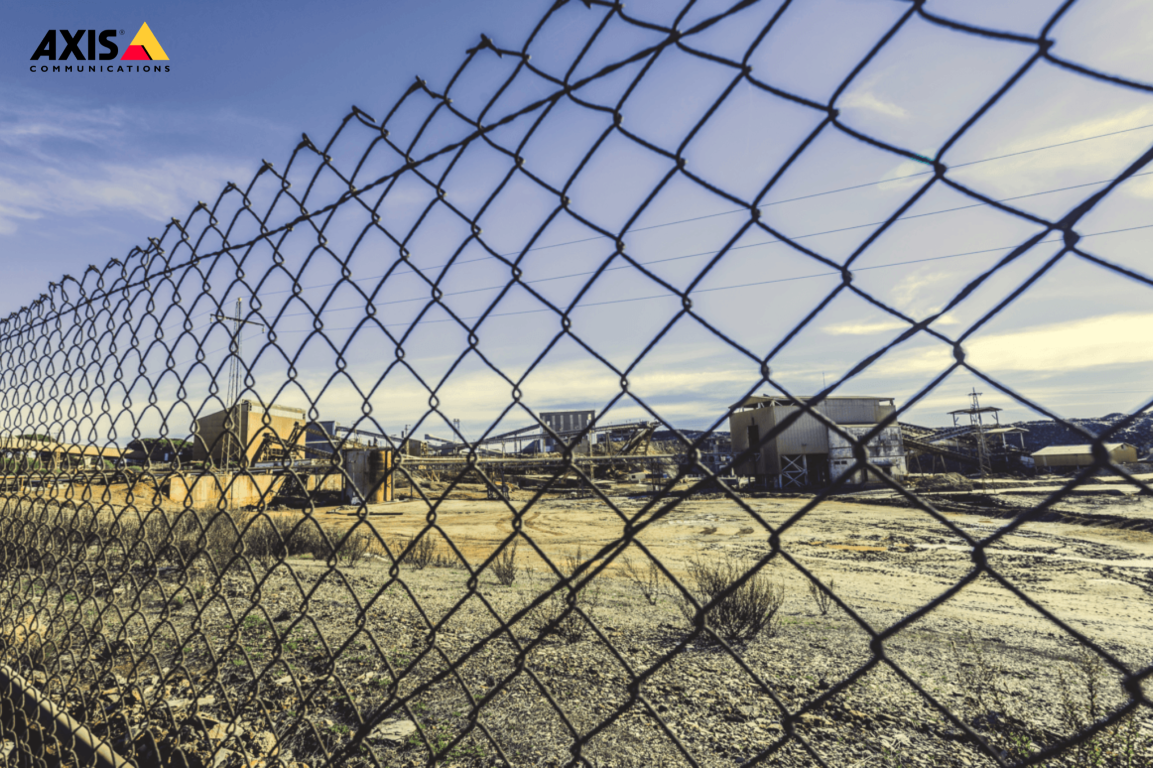
The challenge is that traditional security strategies were not designed for quiet mines. A site that once had hundreds of workers and constant activity can suddenly become largely empty. Infrastructure remains in place. Equipment still holds value. Electrical systems, pumps, tailings facilities, and water management systems must continue functioning. Yet there are fewer personnel on site to monitor what is happening.
This creates a new kind of vulnerability, one that modern visual security technologies are increasingly helping mining organizations address.

The risk doesn’t disappear when production stops
When a mine transitions into a quieter phase, it might appear less exposed to risk. In reality, the opposite is often true. Idle sites can attract unwanted attention. Heavy equipment, fuel storage, copper wiring, and electrical components all have resale value and can become targets for theft. Organized groups may specifically seek out remote industrial sites where oversight appears limited.
Vandalism is another concern. Empty facilities can invite unauthorized entry, leading to damage or safety hazards. In some regions, abandoned-looking infrastructure may even attract recreational trespassers who are unaware of the dangers present at a mining operation.
Beyond security threats, environmental risks remain active as well. Tailings facilities, water treatment systems, and electrical infrastructure continue operating regardless of whether production is underway. Without consistent oversight, small issues can escalate into significant liabilities.
This continued importance of monitoring inactive infrastructure reflects a broader industry trend. According to global research compiled in the Axis Perspectives report, 89 per cent of organizations still identify security as the primary driver of video systems, while 81 per cent cite safety as a top priority. Even when facilities are not fully operational, maintaining visibility across assets and infrastructure remains essential.
At the same time, budgets for security often tighten during idle phases. Maintaining full guard patrols or traditional monitoring systems designed for active operations can quickly become inefficient and costly.
Mining companies therefore face a difficult balance. They must maintain protection and oversight while controlling operational spending.

Seeing the entire site without being there
One of the biggest advantages modern surveillance technologies bring to mining operations is the ability to maintain visibility without constant physical presence. Network-based camera systems now allow operators to monitor remote sites from centralized locations, sometimes hundreds or even thousands of kilometres away. For mining companies with multiple properties or international operations, this creates a significant operational advantage.
Instead of relying solely on on-site guards or periodic inspections, security teams can view critical areas of the mine remotely. Equipment yards, entry roads, storage areas, processing facilities, and environmental infrastructure can all be monitored through high-resolution imaging. These cameras are designed specifically for challenging environments. Dust, vibration, extreme temperatures, and harsh weather conditions are common realities in mining regions, and modern devices are engineered to operate reliably under those conditions.
For large sites, remotely controlled cameras capable of panning, tilting, and zooming provide even greater flexibility. A single device can monitor a wide area and allow operators to investigate activity in detail when needed.
The ability to monitor sites remotely is becoming more important as organizations adopt new infrastructure models. The Axis report notes that cloud-based physical security systems are expected to grow from 27 per cent adoption today to 44 per cent within two years, enabling remote monitoring, flexible deployments, and centralized oversight of distributed assets. Having devices and systems that can seamlessly transition from active on-premises monitoring to cloud based monitoring can mean less total cost of ownership and having the ability to shift quickly without changing a substantial amount of physical installation or equipment. For mining operators managing remote properties, this shift toward cloud-connected monitoring enables security teams to oversee large geographic areas without maintaining a constant on-site presence.
It is also important to note that with cloud-connected services, every bit of data costs money from a transmission and storage perspective, so the need to use devices which offer efficient video compression and transmission is key.

Security that responds only when it matters
Another major shift in modern surveillance systems is the move away from constant manual monitoring. Historically, security personnel had to watch camera feeds continuously to detect suspicious activity. On large mining sites with dozens or even hundreds of cameras, this approach quickly becomes impractical.
Today, intelligent video analytics allow cameras to do much of the monitoring themselves.
Built-in analytics can recognize specific types of activity such as a person entering a restricted zone, a vehicle approaching an access gate, or movement occurring during hours when the site should be empty. When these events occur, the system sends alerts to security teams who can immediately review the footage and determine whether action is required.
This event-driven model dramatically improves efficiency. Instead of staring at screens waiting for something to happen, security teams are notified only when something meaningful occurs.
The growing reliance on intelligent video reflects a broader shift in how organizations view surveillance technology. Increasingly, cameras are no longer treated as passive recording devices but as ‘business sensors’ capable of improving operational efficiency and automating responses to events.
For mining operations in care-and-maintenance phases, this capability is especially valuable. With fewer people on site, it becomes even more important that unusual activity is detected quickly and reliably.

Deterrence still matters
While detection is critical, prevention remains one of the most effective security strategies.
Visible surveillance infrastructure sends a clear signal that a site is monitored and protected. Cameras positioned at access points, along perimeter roads, and near equipment storage areas can discourage opportunistic intruders before they attempt entry.
Modern systems go a step further. Network-based audio systems can automatically broadcast warnings when unauthorized activity is detected. If someone enters a restricted area, the system can deliver a clear message advising that the site is under surveillance and instructing the individual to leave. In many cases, this immediate response is enough to prevent escalation. Intruders who realize they have been detected often leave quickly without causing damage or attempting theft.
Lighting systems can also be integrated into surveillance networks. Motion-triggered lighting can illuminate previously dark areas, drawing attention to movement and further discouraging unwanted activity.
For remote mining sites, these deterrence capabilities add an extra layer of protection without requiring additional personnel.
Monitoring infrastructure that must keep running
Even when mining operations pause, many systems continue operating in the background.
Water treatment systems, electrical substations, fuel storage areas, and tailings management infrastructure all require consistent oversight. If something goes wrong in these areas, the consequences can extend far beyond the mine site itself.
Thermal imaging technology offers an effective way to monitor infrastructure remotely. These devices detect heat differences rather than relying on visible light, allowing them to identify unusual conditions such as overheating equipment or electrical faults.
Thermal imaging can also detect people or vehicles moving in complete darkness, making it particularly useful for remote locations where lighting may be limited.
Radar-based detection systems can monitor large perimeter areas and detect movement across wide distances, even in challenging conditions like fog, dust, or snow. When radar identifies activity, cameras can automatically focus on the location and give operators immediate visual confirmation. Together, these technologies provide a comprehensive picture of what is happening across the site.

Protecting readiness for the future
Many mining operations placed into care-and-maintenance are expected to restart when economic conditions improve. In those situations, preserving the integrity of equipment and infrastructure becomes a strategic priority.
Surveillance systems help ensure that facilities remain secure and operational during downtime. Equipment remains protected from theft or damage, infrastructure can be monitored continuously, and maintenance teams can respond quickly when issues arise.
Organizations are also increasingly using video data to improve operations and asset management. The Axis report notes that 42 per cent of organizations now use video technology to support operational efficiency, while use of video for business intelligence has nearly doubled to 38 per cent.
For mining operators, this means surveillance infrastructure can support not only security but also equipment monitoring, maintenance planning, and operational readiness.
This approach also helps reduce restart costs. When a mine is ready to return to production, operators do not face unexpected repairs, missing equipment, or environmental compliance challenges caused by neglected infrastructure.
Protecting the site today helps protect the mine’s future viability.
A security strategy built for mining cycles
Mining will always be a cyclical industry. Projects expand and contract as markets shift, new deposits are developed, and production phases change.
Security strategies need to evolve alongside those cycles.
Modern visual technologies allow mining companies to maintain strong protection and oversight even when a site is largely inactive. Remote monitoring, intelligent detection, and proactive deterrence provide a level of visibility that traditional approaches struggle to match.
Instead of scaling security down during idle phases and accepting increased risk, mining operators can adopt systems designed specifically for transitional operations.
Because in mining, sometimes the most important thing to protect is what is not currently active.
Data and research insights referenced in this article are drawn in part from the Axis Communications “Axis Perspectives 2026” report, which examines global trends shaping the use of intelligent video technologies across industries.

About Jason Chiu
Jason Chiu is the Professional Services Group Manager with Axis Canada. He has a background in IT and networking and has spent over 18 years in the security industry, from being an integrator, consultant and manufacturer. Jason is an ASIS board certified Physical Security Professional (PSP), is trained in Critical Infrastructure Protection (CIP), Crime Prevention Through Environmental Design (CPTED Levels 1 & 2), and (ISC)2 Certified in Cybersecurity.

About Axis Communications
As the industry leader in video surveillance, Axis Communications develops and supplies innovative network solutions that improve security, safety, operational efficiency, and business intelligence for our customers across the world.
Leave a Reply