
By Aidan Mitchell, President, TAKRAF Canada
Canada remains one of the most demanding environments for mining and material handling equipment and systems. Operating conditions include long supply chains, harsh winters, abrasive ores, tight shutdown windows and a workforce that expects equipment to be safe, maintainable and dependable. These realities define what works in practice.
This year, TAKRAF Canada marks 20 years of operation: a milestone that feels less like a celebration and more like a checkpoint on what the market has taught us. At a recent industry gathering in Vancouver, one theme stood out: many projects are progressing, but timelines remain measured. That reinforces what operators expect from partners today: proven performance, responsive support and upgrade pathways that extend the value of existing assets.
Over the past two decades, we have supported Canadian operations across mining, bulk material handling and minerals processing, from early oil sands activity to complex port and terminal systems, along with a growing footprint in plant equipment and site service. While technologies continue to evolve, expectations remain consistent. Three principles continue to guide how we approach projects, from greenfield developments to brownfield upgrades.

1) Predictable performance beats paper performance
Canadian operators expect equipment to perform in real conditions, not just on paper. Equipment must meet cycle times, throughput targets and availability requirements consistently.
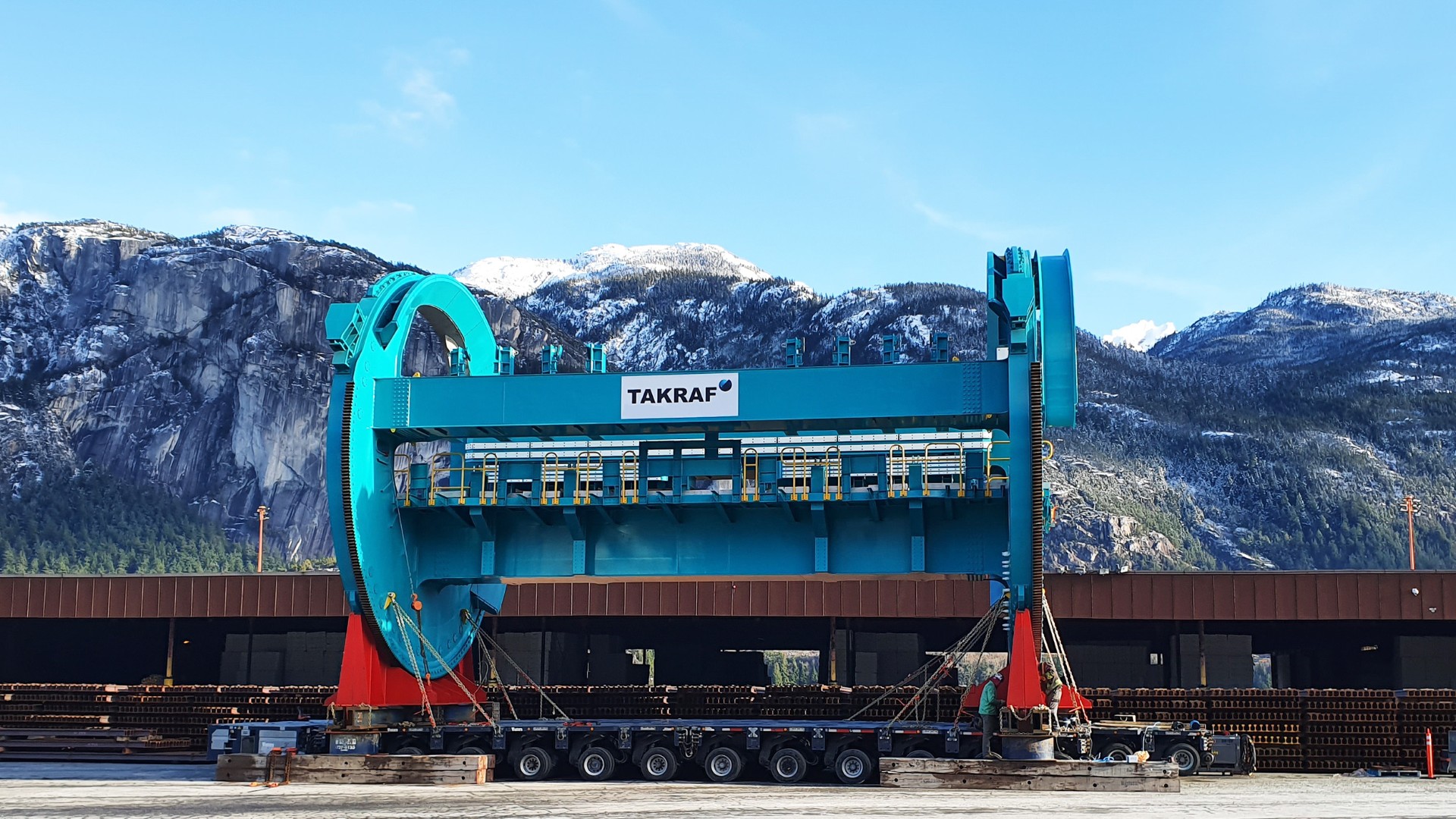
Train unloading is one example. At a major Canadian export terminal, TAKRAF delivered a tandem rotary railcar dumper system supported by an indexer and wheel grippers. The system is designed for repeatable cycles, reliable positioning and safe handling of varying railcar configurations.
Predictable performance also depends on maintainability. Equipment must be accessible, durable and designed for planned maintenance. These factors directly support cost control, safety and uptime, particularly where skilled labour is limited and downtime carries significant cost.
2) Lifecycle value is the new battleground
Canada’s more selective capital environment reinforces the need to maximize value from installed assets. This is changing how projects are defined and how partnerships are assessed.
Across our Canadian work, owners are placing greater emphasis on aftermarket support, brownfield modifications, retrofits and targeted upgrades that extend asset life and improve reliability. This reflects more than cyclical capex pressure. It signals a shift toward continuous improvement, where incremental gains in availability, maintainability and energy efficiency compound over time.
For OEMs, this changes expectations. Delivering equipment is no longer enough. Clients expect long-term engagement, support for legacy systems and practical solutions that align with shutdown constraints while improving safety and performance.
The video above showcases a TAKRAF Tandem Rotary Railcar Dumper (Wagon Tippler) in operation, delivering upon its design promise. TAKRAF’s railcar dumper technology forms an essential part of key material handling equipment supplied to an important Canadian bulk terminal expansion.
3) Local presence matters, supported by global depth
Canadian operations require strong local responsiveness. Response time, capability and accountability are critical when issues arise, whether related to material flow, wear or system performance. At the same time, complex challenges require specialized expertise.
The most effective approach combines local execution with global engineering depth. Canadian teams lead project delivery, commissioning and service, while drawing on broader technical resources as needed. This model supports schedule control and technical quality, particularly for complex bulk material handling and processing systems.
As operations become more integrated, this balance becomes even more important. Mines and terminals expect systems that function as complete solutions rather than individual machines. Capacity, recovery and efficiency depend on how each part of the system interacts across handling and processing stages.

Looking ahead: Measured timelines, real momentum
Measured timelines across the market reflect a more disciplined approach to project development. Operators are validating designs, securing supply chains and planning for long-term operability before committing capital.
For customers, OEMs and EPC partners, this increases the importance on early-stage engagement. The pre-award phase must deliver technical clarity and reduce risk.
Looking ahead, the direction is clear. Canadian projects continue to focus on reliability, maintainability, energy efficiency and water stewardship. These priorities influence decisions across crushing, conveying, dewatering and port operations, while shaping long-term asset strategies.
At CIM CONNECT 2026 in Vancouver, our team showcased a DELKOR High-Rate Thickener model and engaged in conversations that reflected these priorities. Operators consistently emphasized stable performance, controlled operation and systems that are easier to maintain. These discussions are valuable because they connect technology choices directly to operational realities.
A 20-year milestone and a clear perspective
Twenty years in Canada have reinforced a simple principle: the industry values partners who understand real operating conditions, deliver reliable solutions and remain engaged well beyond commissioning.
As TAKRAF Canada marks 20 years, we recognize the strong relationships built with owners, operators, engineers and partners across the country. The next decade will bring new challenges, but the fundamentals remain unchanged. Canadian mining will continue to demand safe and reliable systems, practical innovation and partners who deliver consistent performance over time.
To learn more about TAKRAF Group capabilities, visit our website www.takraf.com or be in touch via info@takraf.com.
For Mining with Meaning.

About Aidan Mitchell
Aidan Mitchell is President of TAKRAF Canada and has 35 years of international experience in engineering, operations and business leadership, including two decades at TAKRAF Group. He is committed to delivering practical, client-focused solutions across mining, bulk material handling and minerals processing

About TAKRAF Group
TAKRAF Group, through its established and well-known brands, TAKRAF and DELKOR, provides innovative technological solutions to the mining and associated industries. With experience acquired over three centuries, the Group is well positioned to provide equipment, systems and services that best satisfy its clients’ mining, comminution, material handling, liquid/solid separation and beneficiation requirements. Servicing owners and operators around the world, TAKRAF Group‘s engineered solutions are customized to the unique project requirements and are aimed at lowering the total cost of ownership and reducing environmental impact by improving efficiency with safe and reliable equipment. For further information, visit www.takraf.com or, e-mail info@takraf.com.
Leave a Reply